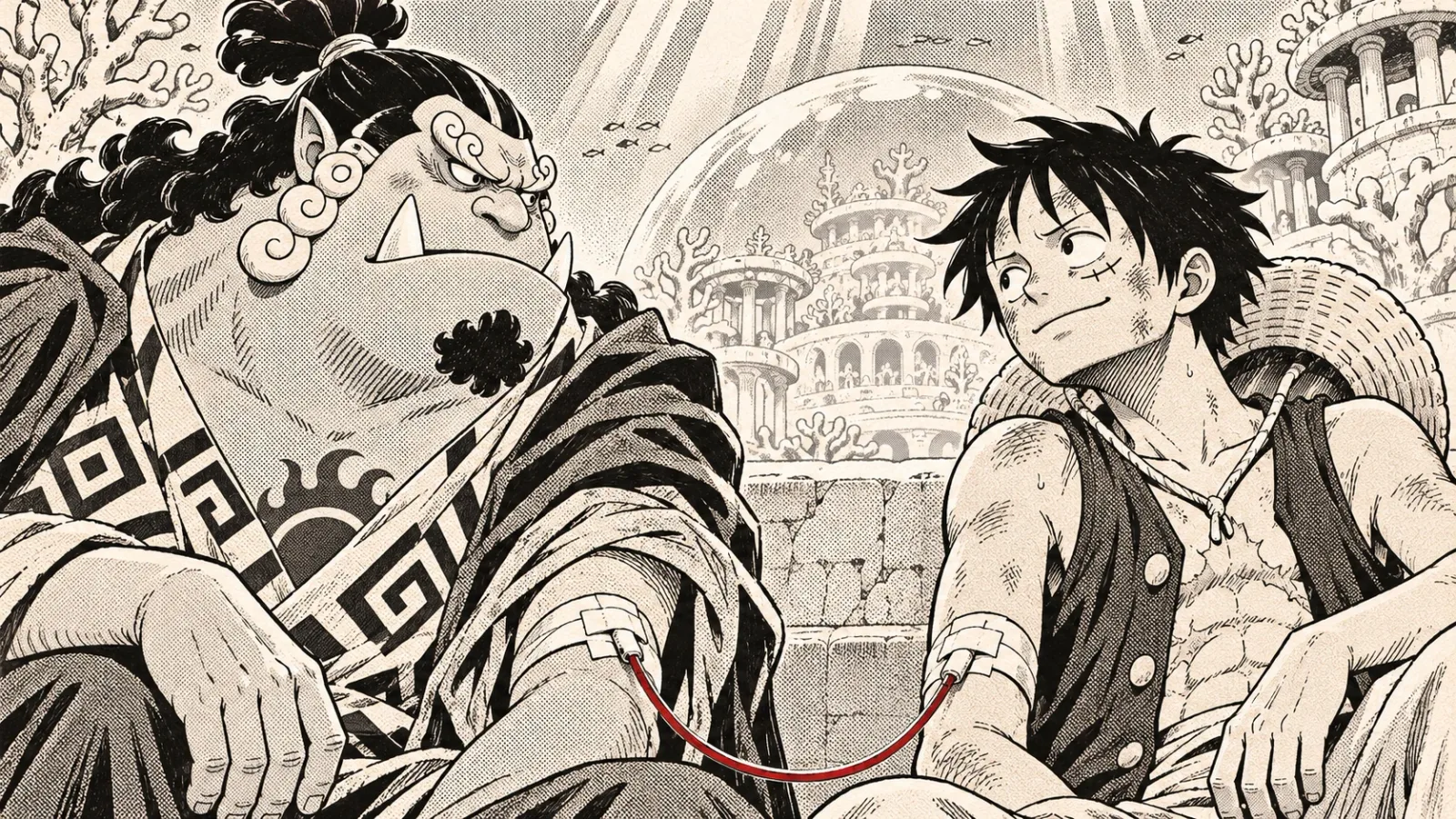
Hody Jones loses, but beating him is the part of Fish-Man Island the Straw Hats are best equipped to handle. The harder problem is what survives him: a story about humans that children learn before they ever meet one. The arc’s strongest answer comes after the fighting, when Jinbe rolls up his sleeve to save Luffy.
The set-up: paradise with a border running through it
The Fish-Man Island arc covers chapters 603–653, following the crew’s reunion at Sabaody. Their route to the New World takes them beneath the Red Line to an island enclosed in an enormous bubble, 10,000 metres underwater. It looks like the reward for a long journey. Its inhabitants have good reasons to be wary of visitors from above. (Arc range; official story recap.)
That tension reaches the crew before the coup does. Sanji needs donor blood, and the island’s prohibition against sharing blood with humans becomes an obstacle to treatment. The gag that gets him there is exhausting; the barrier it exposes is deadly serious.
Then Madam Shyarly foresees Luffy destroying Fish-Man Island. The reader knows him as a rescuer, but the island receives a warning about an outsider in a straw hat. That gap matters: good intentions do not automatically make someone trustworthy. (Chapter 610.)
Fisher Tiger and Otohime want a future they cannot reach alone
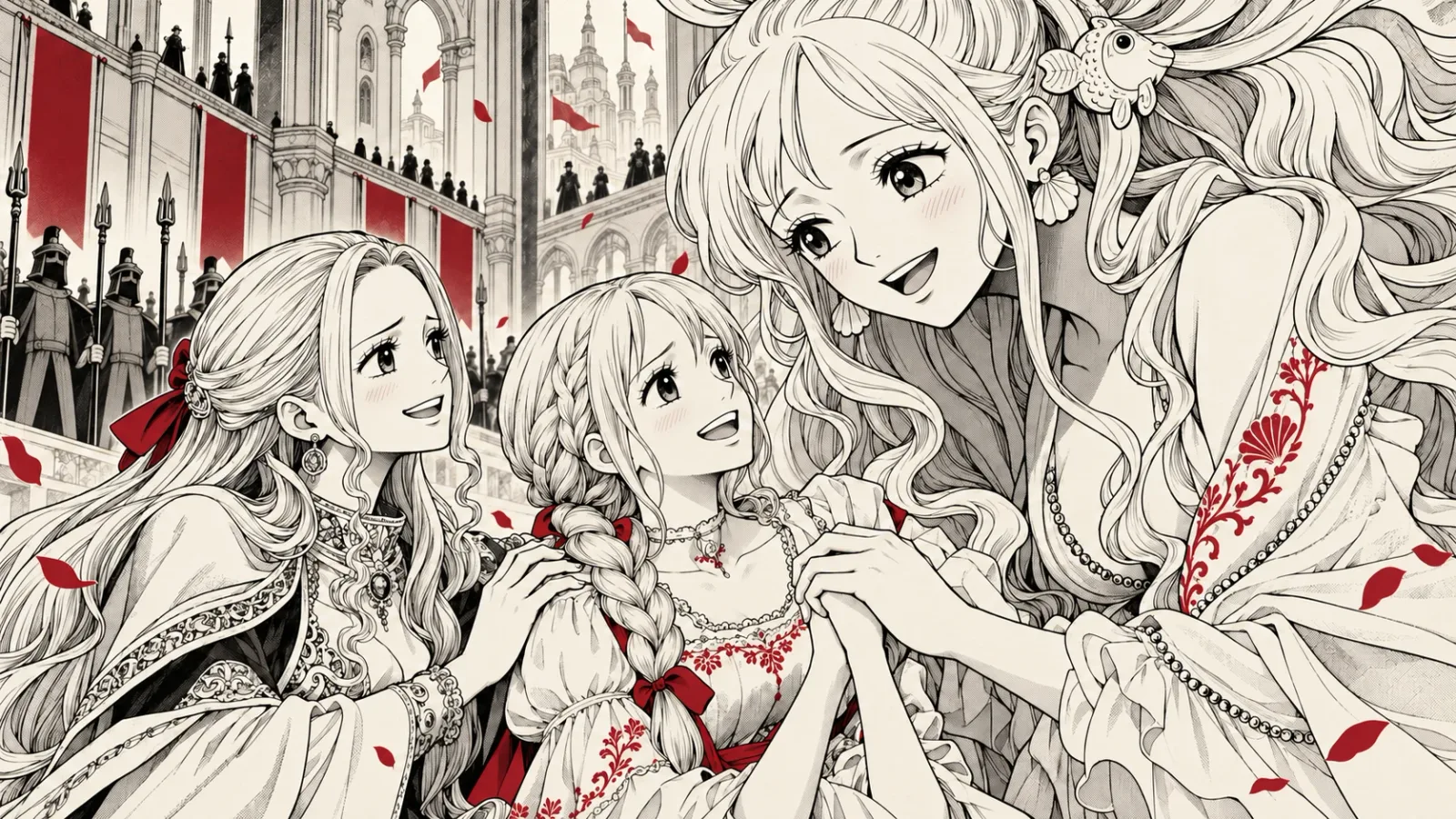
The flashback is the arc’s centre of gravity. Fisher Tiger frees slaves and leads the Sun Pirates; Queen Otohime campaigns for closer relations with humans. Their methods differ, but treating them as simple opposites misses Tiger’s tragedy.
In chapter 623, after returning Koala to her home, Tiger is ambushed by Marines. Human blood is available to save him. He refuses it. He knows kind humans exist and recognises the hope in Otohime’s ideals, yet his experience of enslavement has left him unable to accept the transfusion. Knowing what should change does not mean he can make that change inside himself. (Chapter 623.)
This also makes the story told about his death crucial. The claim that humans refused to donate reverses what happened. A painful personal contradiction becomes a cleaner grievance for other people to inherit.
Otohime confronts that inheritance directly. In chapter 625, she protects the Celestial Dragon Mjosgard from a shooting and tells the adults to think about the children watching. She understands their anger. Her intervention asks what their children will learn to do with it. She later accompanies Mjosgard to the surface and returns with a document supporting her campaign. Her optimism involves taking a frightening political risk herself. (Chapter 625.)
Neither character gets an easy victory. Tiger cannot escape his wounds; Otohime’s work is vulnerable to violence and manipulation. Their children and followers inherit unfinished choices.
Hody turns inherited hatred into a coup
Hody’s New Fish-Man Pirates move against Neptune’s royal family, while Vander Decken IX’s pursuit of Shirahoshi supplies another threat inside the same crisis. Decken treats the princess’s refusal as something he can punish. Hody treats coexistence with humans as betrayal. Both make other people’s freedom intolerable.
The coup’s ugliest revelation comes in chapter 632: Hody killed Otohime and blamed a human. Shirahoshi already knows. Her refusal to hate him follows her mother’s wish, though her silence has not prevented him from harming anyone else. That is an uncomfortable limit to her choice, and the story lets Hody exploit it. Compassion alone cannot stop an armed takeover. (Chapter 632.)
Chapters 643–644 then explain what makes Hody different from Tiger. When asked what humans personally did to him, his answer is nothing. He has absorbed the Fish-Man District’s stories and prejudices until vengeance has become his purpose. He even rejects examples of friendship that might disturb that purpose. (Chapters 643 and 644.)
This does not erase the slavery and persecution surrounding him. It distinguishes remembering injustice from teaching children that hatred is their duty. Hody demands loyalty to suffering while destroying the future the people who suffered might have wanted.
Fukaboshi’s response makes the criticism harder to shrug off. He recognises that the kingdom allowed resentment to grow out of sight. Defeating Hody will remove a leader; it cannot substitute for confronting what raised him.
The victory needs Luffy, Shirahoshi and Jinbe
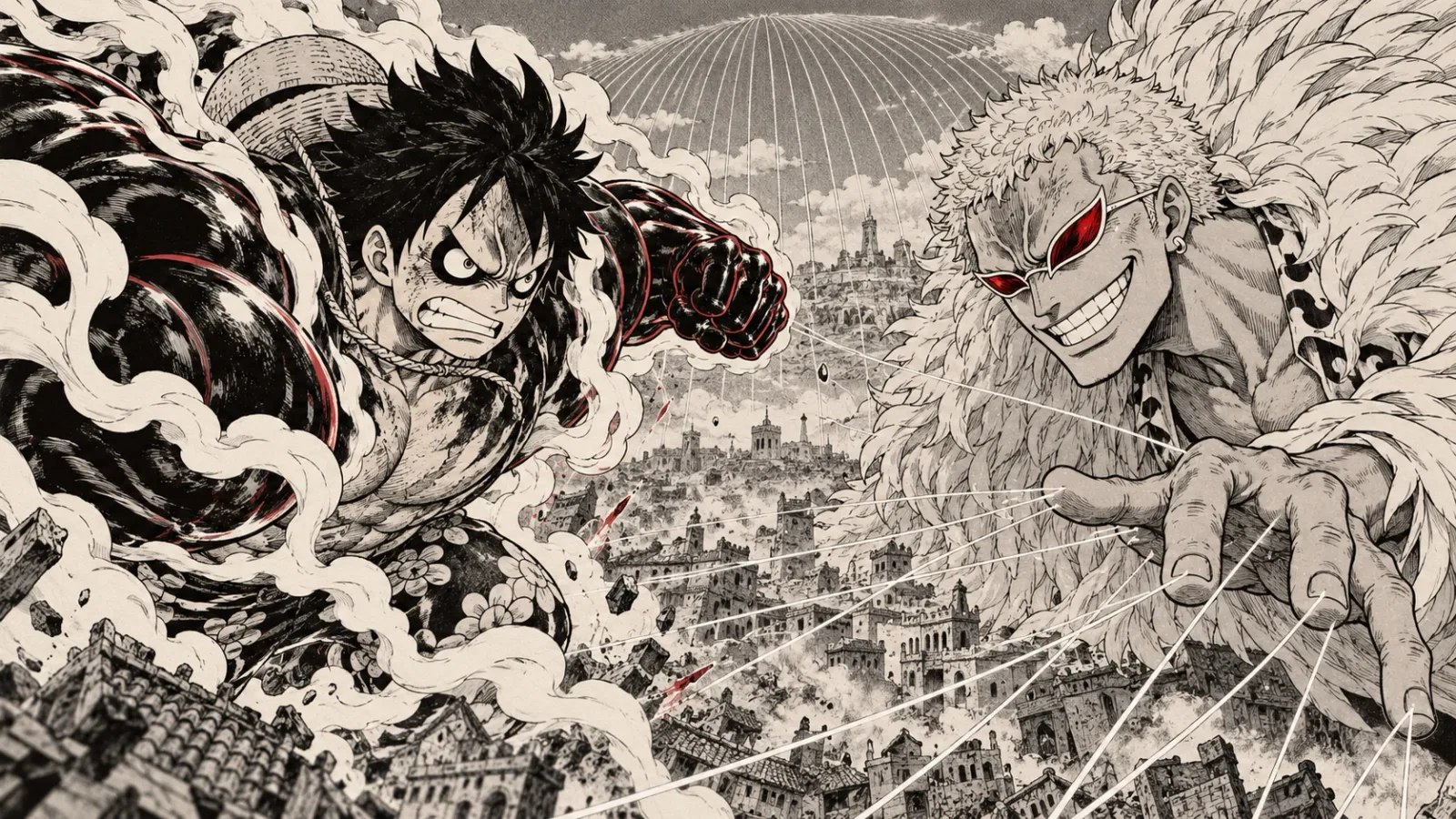
The plaza battle gives the reunited crew room to show what two years of training achieved. Luffy’s Conqueror’s Haki drops half the opposing force, and the Straw Hats and Jinbe overwhelm the officers. The imbalance is satisfying as a reunion showcase, even if it gives several fights little suspense. (Official recap.)
GrandLineReview’s arc review makes a useful criticism here: Hody and his officers struggle to feel threatening even when the flashback gives the conflict weight. The distinction helps explain the arc’s uneven rhythm. Its strongest tension comes from whether people can trust each other and whether the island can survive, rather than from evenly matched duels.
Noah makes that second question urgent. Decken turns the enormous ark into a weapon aimed at Shirahoshi, and it becomes a falling catastrophe. Luffy defeats Hody, but still has to stop the ship. He attacks Noah to save the island; Shirahoshi’s call brings the Sea Kings, which halt it before he destroys it completely. Chapter 647 gives her a decisive role without requiring her to become a brawler. Her desire to save Luffy reaches creatures he cannot command. (Chapter 647.)
Then Luffy needs blood. Jinbe volunteers despite the prohibition, and the arc finally puts an alternative to its inherited stories in public view. The donation saves one particular friend. That is why it lands: nobody has to settle centuries of history before choosing to keep someone alive. Luffy follows it by inviting Jinbe to join his crew. (Chapter 648.)
What the arc leaves for the voyage ahead
Robin’s conversation with Neptune in chapter 649 reveals that Shirahoshi is Poseidon. Her power over the Sea Kings makes an ancient weapon a person with feelings, relationships and a future others may try to control.
The same conversation connects Noah to Joy Boy. The Sea Forest Poneglyph contains his apology for a broken promise to the mermaid princess of his era. The royal family has preserved the ark for a promised time, but Neptune does not know the promise’s full details. The arc establishes the connection; it does not explain Noah’s eventual mission. (Chapter 649.)
Keep that distinction when looking back at Shyarly’s vision, too. A prophecy of destruction, an enormous ark and a wish for life closer to humans invite theories about evacuation or liberation. They do not, by this arc’s end, confirm how or why the island would be destroyed. Rescuing it from Noah does not answer every question raised by the vision.
There is also an immediate political problem. Big Mom’s protection comes with a candy tribute; when the island cannot supply it, Luffy takes responsibility and declares that he will defeat her and make Fish-Man Island his territory. Saving a place once means little if its protector can threaten it again over the next payment. (Chapter 651.)
That is the scale of the promise Luffy carries toward the New World. He can beat Hody. Protecting the people Hody endangered will require more than winning that fight. The voyage continues in our Punk Hazard recap, which covers the next arc and its spoilers.
Spoilers through chapter 653.