The fastest way to stop someone becoming Pirate King might be to hide one stone. Forget matching every Emperor ship for ship: if nobody can assemble the route to Laugh Tale, nobody gets to finish the race. That is what makes the man marked by flames more than another mystery silhouette.
The theory: the Government controls the missing coordinate
The theory is that the man marked by flames—also called the man with the burn scar, or Hinokizu—guards the missing Road Poneglyph on the World Government’s behalf. His rumored black ship would be a moving prison for the information pirates need, with whirlpools keeping would-be visitors away.
That is a theory about his allegiance, not an identification. We do not need to decide whether he is an existing character to ask whose interests his secrecy serves. And the essential warning comes first: the Government connection is Shiryu’s suspicion in chapter 1081, not a confirmed revelation.
The evidence: one missing stone can block the route
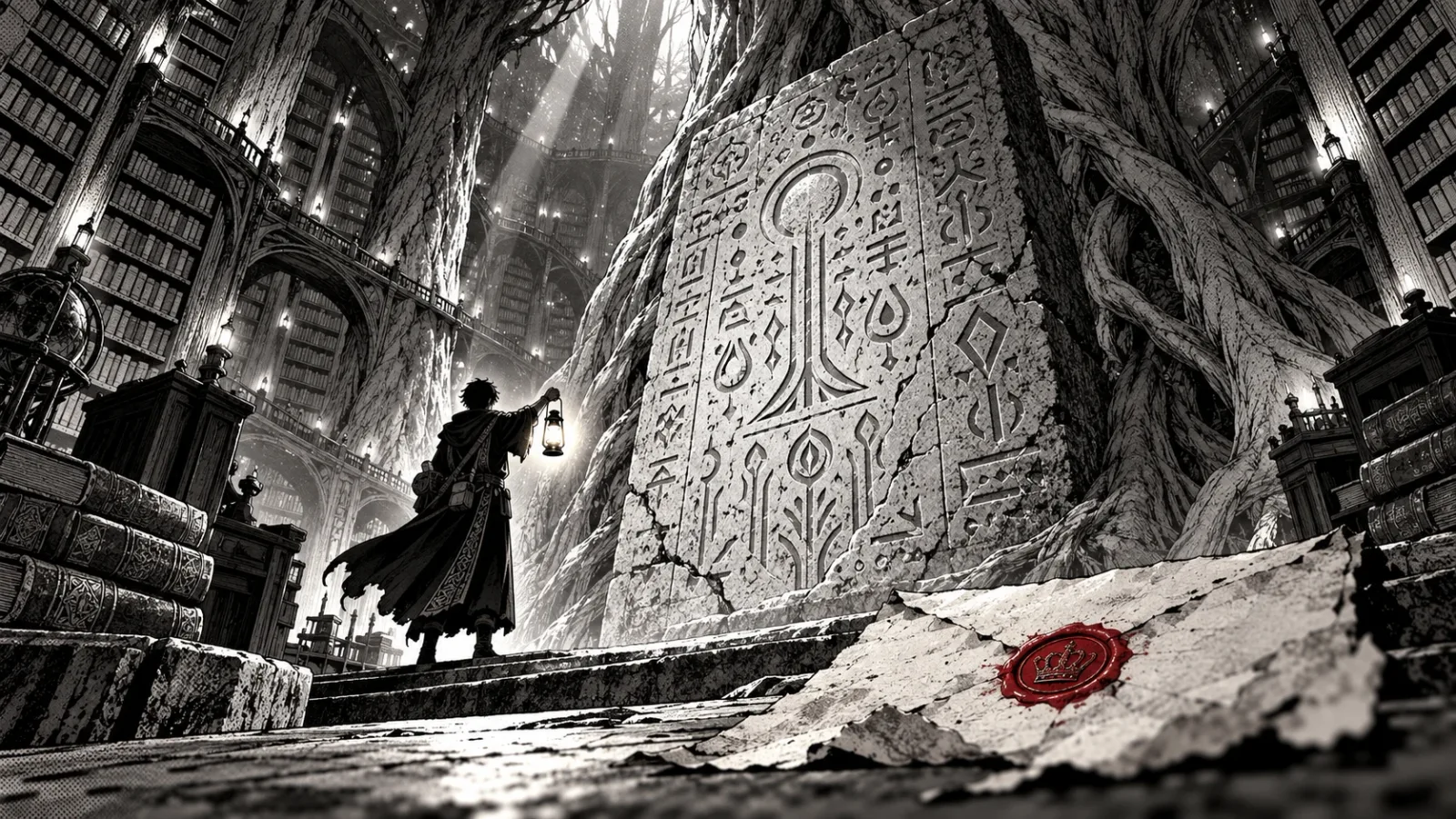
Chapter 818 establishes the navigational problem: four Road Poneglyphs identify four locations, whose intersecting lines reveal Laugh Tale. Their importance is practical. A pirate can defeat an Emperor and still lack the information needed to reach the destination. Our Zou recap covers the moment the treasure hunt acquires those rules.
Chapter 967 then shows a Road Poneglyph at Fish-Man Island during Roger’s voyage. That gives the missing stone a historical location, but it does not show who removed it or where it went. Connecting its disappearance to a Government operation requires an extra step the manga has not supplied.
The modern lead arrives in chapter 1056. After Law shares Wano’s rubbing with Kid, Killer brings up the man with the burn mark as someone they need to find for the coming struggle over the One Piece. Luffy does not recognize the reference. The clue is already circulating among rivals before the Straw Hats understand it.
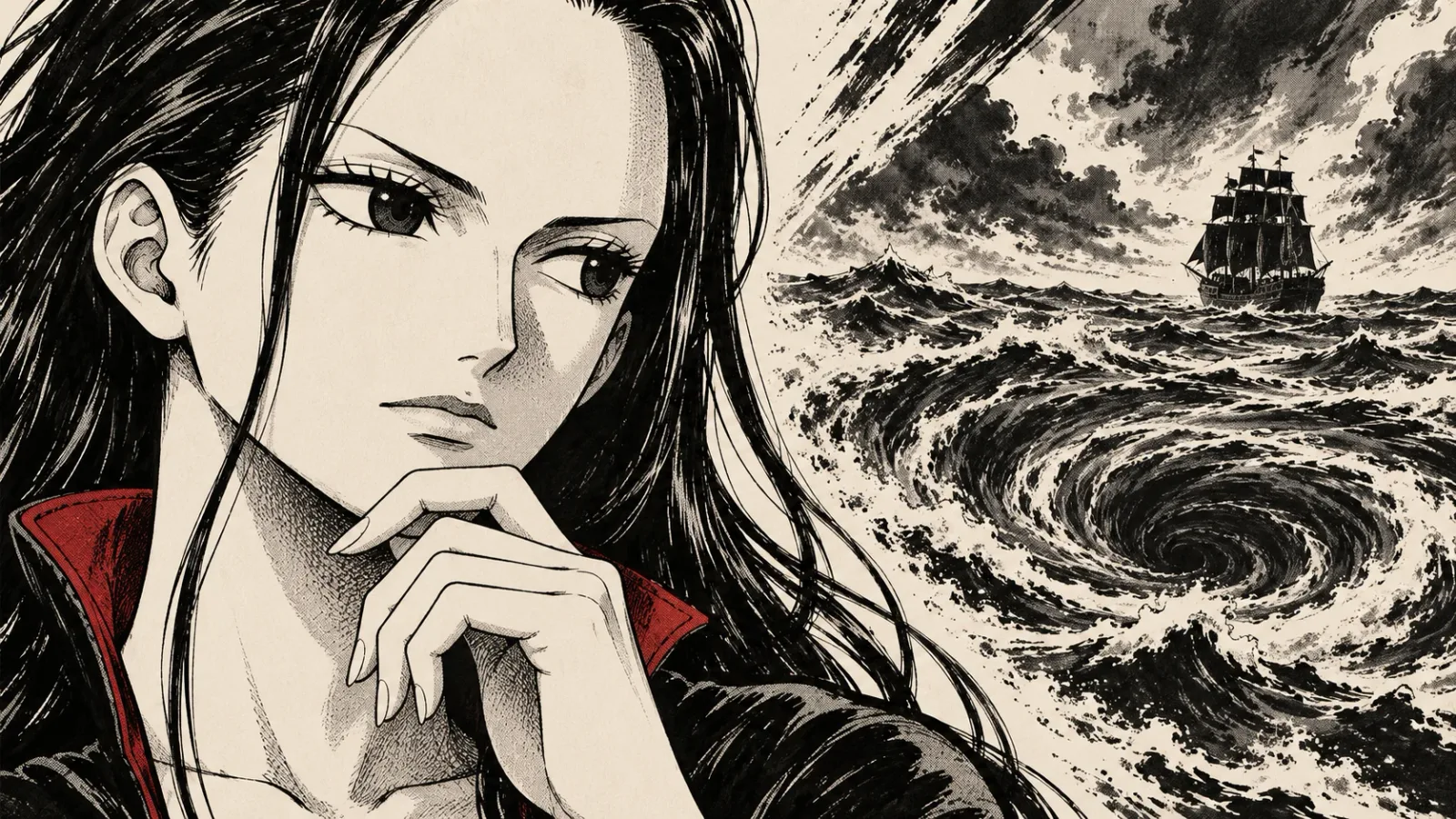
Chapter 1081 supplies the details that make the Government theory possible. During the Blackbeard Pirates’ conversation with Kuzan, they discuss the man’s rumored possession of a Road Poneglyph, his black ship and the whirlpools said to swallow approaching vessels. Shiryu suggests a Government connection because keeping a stone out of pirate hands would obstruct their search.
The distinction matters: the chapter confirms that these pirates discuss the rumors. It does not independently verify every rumor. A whirlpool is not yet a demonstrated Devil Fruit technique, and Shiryu has not produced an assignment signed in Mary Geoise.
Why the Government would want this arrangement
The motive fits a much older conflict. In chapter 395, Clover’s discussion of the lost kingdom is cut short, and the Buster Call against Ohara begins. Suppressing knowledge is part of the Government’s survival strategy, not a side project.
Artur’s recent The Geopolitics of One Piece offers useful context on how the Government maintains power by managing rival forces. My inference is that secretly controlling a Road Poneglyph could extend that strategy to navigation. One operation would obstruct every competing crew without requiring the Navy to predict which pirate would become the next serious contender.
A moving vessel would also offer an advantage over a fixed fortress: discovering yesterday’s location would not guarantee finding it tomorrow. If the whirlpool reports are accurate, they could discourage pursuit and help keep the ship’s movements obscure. Those are possible benefits of the arrangement, not evidence that the arrangement exists.
For Robin, this would make the last coordinate another confrontation with the institution that tried to erase her ability to read it. That is a compelling story possibility. It is also exactly the kind of thematic fit that can make a theory feel more proven than it is.
The case against: secrecy does not establish allegiance
Shiryu’s explanation is economical, but the same behavior could serve the Government’s enemies. Someone protecting the stone from Mary Geoise might also travel secretly and repel unfamiliar ships. Concealment tells us that access is restricted; it does not tell us why.
There is a second problem: guarding the physical stone would not necessarily mean controlling all copies. Chapter 818 explains how its text can be reproduced. A Government custodian would need to worry about rubbings already circulating, not simply keep the original behind a dangerous stretch of water.
The theory therefore needs more than a formidable guardian. It needs a reason to believe that guarding this particular stone still blocks access to its information. We have not been shown a complete history of who copied it after Roger’s journey.
Finally, the black ship and the whirlpools leave plenty of room for an independent actor. Ohara’s older candidate survey is useful precisely because it explores several possible identities; none of those possibilities can turn a reported feature into a confirmed affiliation. Picking a familiar face would not solve the allegiance question automatically.
Verdict: plausible, with one missing connection
Plausible, but unproven. Shiryu gives the theory an explicit foothold in the manga, and the Government has a clear reason to obstruct the route. The weakness is the missing connection between that motive and this particular man.
The decisive evidence would be an order, a demonstrated relationship, or an explanation from the guardian himself. Until then, the theory offers a sharp way to read the final Poneglyph hunt: the next obstacle may be someone deliberately keeping the destination out of reach. Who benefits from that delay is still the question.
Spoilers through chapter 1196.